
On how art fairs design behaviour, not just display work.
India Art Fair, held annually in Delhi, brings together national and international galleries, artists, collectors and brands under one large exhibition roof. You see large-scale installations, photography, digital art, functional pieces like furniture, and paintings — all coexisting in one expansive space.
But beyond the scale and diversity, what interested me this year wasn’t just the art itself. It was how the entire experience was structured.
One of the first things I noticed when I walked in was how strongly the experience economy is shaping cultural spaces. Large-scale art fairs are no longer just exhibitions; they are designed engagements. The spatial flow was deliberate — paintings separated from installations and functional pieces. Quieter, more enclosed corners naturally drew those who wanted to slow down and observe. Wider corridors kept movement constant.
It didn’t feel chaotic. It felt orchestrated.
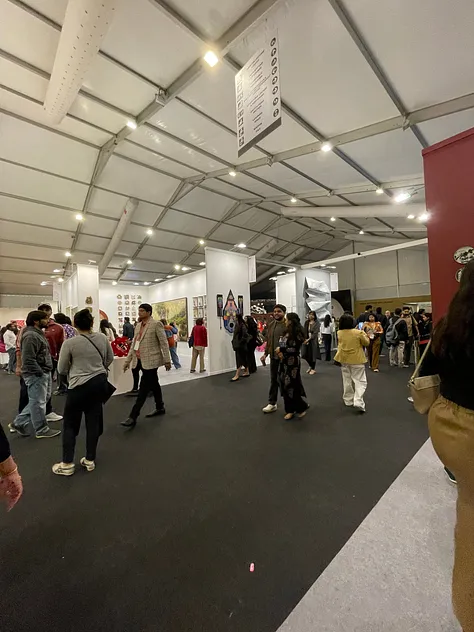
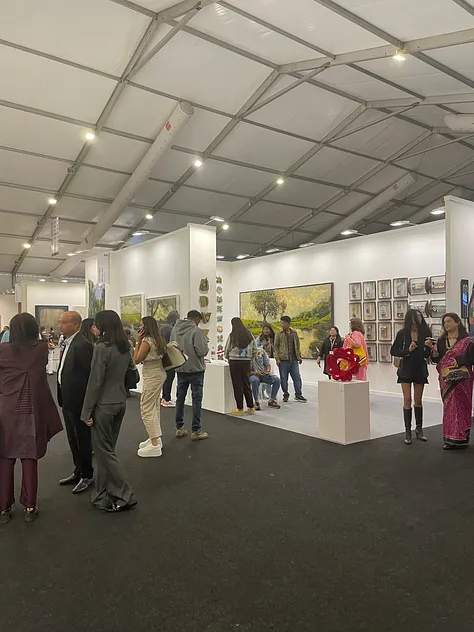
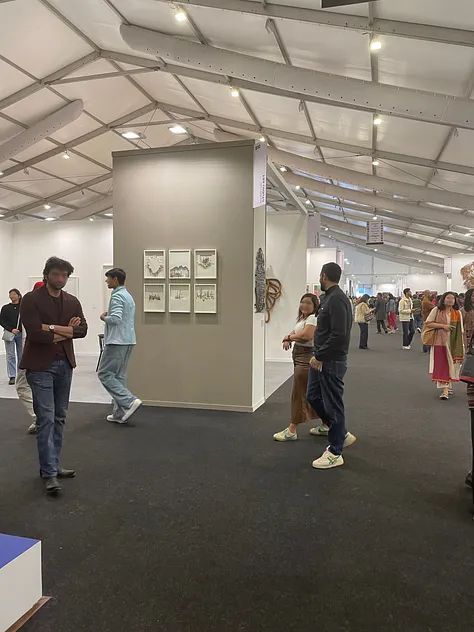
Indian and international galleries were placed in distinct sections, catering to different interests and perhaps different audiences. VIP lounges were positioned toward the end, with organiser assistance that created specialised experiences without overtly displaying hierarchy. Even sponsor visibility — like the BMW installation — felt intentionally integrated yet contained.
Multiple galleries, brands and agencies operated under the same roof, but instead of competing visually, they seemed to function within a larger system defined by the fair’s overall layout and direction.
Another layer that stood out to me was audience behaviour. I found myself observing not just the artwork, but how people interacted with it — their attention span, where they paused, which booths gathered density.
Most visitors spent only a few seconds with individual works unless they were immersive or large-scale installations. Those naturally held attention longer. It made me question whether scale now directly influences perceived importance.
Most people attended in pairs or small groups. I noticed how conversation shaped engagement — quick exchanges, interpretations, recommendations. The experience became social. Art was less solitary than I expected.
Something else felt telling: people weren’t just taking pictures of artwork. They were taking pictures with it. The artwork became part of a larger personal narrative. Documentation wasn’t just about the art — it was about being present in the space.
Most visitors, and even many gallery or brand representatives, were young — largely Millennial and Gen Z. That demographic shift feels significant. Cultural engagement seems increasingly driven by a generation comfortable navigating both physical and digital forms of expression.
Brand presence is now inseparable from large cultural gatherings. From stadiums to concerts to art fairs, brands and audiences coexist. At the fair, luxury, hospitality and lifestyle brands were embedded into the environment. But what differentiated them was approach.
The most effective brand displays weren’t simply aesthetic; they were narrative-led.
A chandelier installation by Dhruv Aggarwal wasn’t just presented as an object. Representatives explained the designer’s vision and the intricacies behind the piece. People lingered. They asked questions. The object became a conversation.
In a space saturated with visual stimuli, context becomes currency.
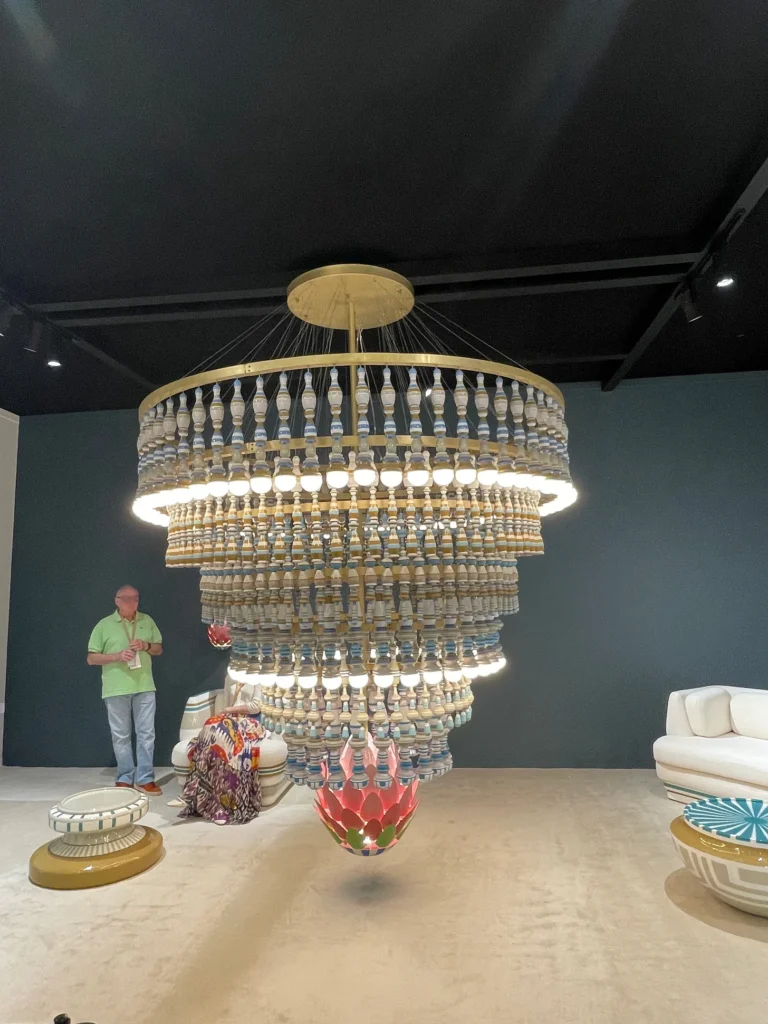
Chandelier installation by Dhruv Aggarwal at India Art Fair 2026.
As someone who values creative expression, I sensed that the 2026 creative climate extends beyond visual appeal. Art is being used as a medium to interact, question and position identity — even for brands. Bold, colourful walls suggested confidence in creative direction. Increased international presence and scale suggested growth in India’s cultural capital.
But growth also introduces commercial tension. The visibility of luxury and global names inevitably shifts attention. While this elevates prestige, it also raises questions about accessibility and representation for lesser-known artists.
There was also a noticeable shift in artistic format. Contemporary, digital and multimedia works dominated. Many pieces required time and interpretation — they weren’t immediate. Art unfolded in layers, through symbolism and detail.
By the end of the visit, I realised India Art Fair 2026 felt less like a space where artworks were displayed and more like an ecosystem — of behaviour, branding, conversation and evolving taste.
It wasn’t just about what was shown.
It was about how we were invited to move, engage and remember.
And perhaps that’s where the real shift lies.